Rs 5,000 crore additional liquidity facility to be provided by the National Housing Bank to boost liquidity in housing sector, the RBI said.
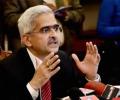
Experts disagree with the idea and the Reserve Bank of India (RBI), which has the sole right to print money, is not comfortable with it as well.

The growth was primarily driven by domestic investments, which accounted for 60 per cent of the total inflows during the first quarter of the financial year.

All BSE sectoral indices ended in the red, with oil and gas, bankex, capital goods and finance falling up to 3.04 per cent.
.jpg)
Declining prices of food items like vegetables pulled down retail inflation to 5.59 per cent in July, bringing it back within the RBI's comfort zone after two months, official data showed on Thursday. The retail inflation based on the Consumer Price Index (CPI) had remained above 6 per cent during May and June. The government has mandated the RBI to maintain retail inflation at 4 per cent, with a margin of 2 per cent on either side. The CPI based inflation stood at 6.26 per cent in June 2021 and 6.73 per cent in July 2020.

The Reserve Bank on Friday projected retail inflation to be in 5-5.2 per cent range during the first half of the next fiscal year, expecting further softening of vegetables prices in near term. Also, it has lowered the retail inflation forecast for the current January-March quarter of 2020-21 fiscal at 5.2 per cent. The Reserve Bank (RBI) has kept the key policy rate unchanged at 4 per cent, with an accommodative stance, so as to ensure that inflation remains well within the target, Governor Shaktikanta Das said while announcing the last monetary policy of 2020-21.

Food prices saw a sharp rise of 3.12 per cent in March compared to 2.69 per cent in the previous month

The central bank was widely expected to maintain status quo.

This is the ninth consecutive month that the manufacturing PMI remained above the 50-point-mark.

The Reserve Bank is unlikely to lower the interest rates.

RBI awaits fiscal stance, inflation to cool off to decide on rates.

The wholesale price-based inflation rose to a four-month high of 14.55 per cent in March, mainly due to hardening of crude oil and commodity prices, even though vegetables witnessed easing of price pressures. As per the government data released on Monday, WPI inflation has remained in double digits for the 12th consecutive month beginning April 2021. The last time such a level of WPI was recorded was in November 2021, when inflation was 14.87 per cent.

Subdued prices of food items like vegetables pulled down retail inflation for the third month in a row to 5.3 per cent in August, within the RBI's comfort zone. While the Consumer Price Index (CPI)-based retail inflation declined to 5.3 per cent in August from 6.69 per cent in the same month a year ago, food inflation dipped at a much faster pace to 3.11 per cent from 9.05 per cent in August 2020. The food inflation was also lower than 3.96 per cent in preceding month of July.
According to the global financial services major, inflation may remain sticky, with a possible El Nino effect on the monsoon likely to push up food prices and geopolitical uncertainties seen pumping up global commodity rates.

The rupee is expected to remain under pressure in the near term, given the strengthening of the dollar against major global currencies and widening of the trade deficit.

RBI expects the growth in the next fiscal to strengthen gradually, notwithstanding the significant headwinds.
RBI is scheduled to announce mid-quarter review of monetary policy for 2013-14 on June 17.

On one hand, Operation Greens should help to smoothen volatility in the prices of vegetables, whereas the proposal to enhance and extend minimum support prices to augment farmer incomes, may emerge as an inflation risk.

At the BSE, 1,552 stocks advanced, while 1,419 declined and 118 remained unchanged.

The S&P BSE Sensex shed 286 points to close at 24,539 and the Nifty50 lost 100 points to end at 7,456.

The WPI number follows retail inflation (CPI) data, which had slipped to a record low of 3.78 per cent in July.

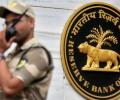
There is a near consensus that at least a 25 basis points cut, if not 50, can be expected in the June policy.

There is a narrow chance that the central bank may cut rates in the future, according to a poll of 15 economists and treasurers.

Risk sentiment received a boost after eight core sectors grew to a five-month high of 4.9 per cent in August

The rupee strengthened by 13 paise to 61.67 against the US dollar at close.

Fall in both WPI and CPI inflation to pressure RBI, say analysts

Exports in January 2014 stood at $26.89 billion.

After navigating the turbulent pandemic waves, the recovering Indian economy is now sailing through unchartered waters of rising coronavirus cases, spiralling commodity prices and spiking inflation though the lighthouse of sustainable growth remains visible. As 2022 begins, a raft of developments, ranging from Budgetary announcements to continuation of stimulus measures to monetary policy, will set the tone for the domestic economy, which is projected to grow more than 9 per cent in the current fiscal ending March 2022. The country's continuing massive vaccination drive and 'precaution' doses starting for select categories of people this month will provide a firewall against any steep spike in coronavirus cases amid the emergence of the Omicron variant.

The minutes of the December MPC meet reveal members felt the current spike in the headline inflation rate was due to a temporary supply shock on the food front, expected to moderate by the second quarter of 2020-21.

Issuers are currently not comfortable with the bids they have been getting for their bond offerings.
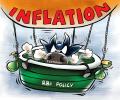
On food inflation, RBI said it is likely to soften from the high levels registered in December and the decline is expected to become more pronounced during the fourth quarter of this fiscal as onion prices ease following arrivals of late kharif and rabi harvests.

The headline HSBC India Purchasing Managers' Index -- a composite gauge designed to give a single-figure snapshot of manufacturing business conditions -- stood at 54.5 in December, up from 53.3 in the prior month.
.jpg)
The rate cut, the industry chambers argued, could have given a positive signal to the manufacturing sector, which is undergoing difficult times.
The American brokerage firm said it expects the rate cut to happen only in December if the monsoons normalise to cool down inflation or early 2015 in case prices rise prolongs.

The RBI has cut key rates to boost the economy.

Only one 25 basis points rate cut is likely this calendar year, between April and June, the poll says

The final guidelines to link the interest rate to external benchmarks will be issued by the end of this month

Around 67 per cent respondents see the rupee to be at or below 60 for FY'15.

The RBI left interest rates unchanged, saying there was no substantial development on inflation or fiscal fronts to warrant a fresh reduction.
